

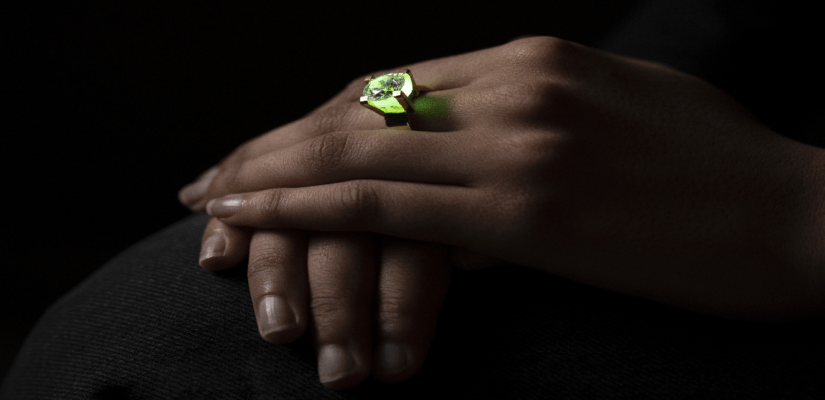
The Alchemical Dream and Reality of Man-made Gemstones: A Review of 10 Stones
Sofie Boons is the Crafts Council Research Fellow at the Centre for Print Research at the University of the West of England where she is currently completing a PhD investigating the design implications, possibilities, and limits of utilising man-made crystals in the development of jewellery designs. As an award winning self-proclaimed Alchemical jeweller her work has been shown globally at a range of galleries/exhibitions, and pieces have been included in permanent collections. Boons is also well-known for her work at the British Academy of Jewellery, where she was the Head of Academy for several years before joining the CFPR at the University of the West of England for her Research.
This is what Sofie says about her Alchemical project:
“As I stretch out my hand a slight shiver runs across my spine – the small items I hold in my palm are valued at thousands of pounds. Perilously small enough to fall between the cracks in the floorboards underneath me, I cautiously return these miniscule symbols of power, wealth and adornment to the gemstone dealer who’s small shop in Hatton Garden I am standing in.
Diamonds, he is keen to tell me, remain a popular commodity. This is not surprising because our human fascination with gemstones, including diamonds, can be traced back centuries. When we speak of treasure, we don’t have to look far in popular culture to find gemstone filled boxes, or a large shimmering crystal, often at the centre of a ploy for it to be stolen or retrieved. But, for quite some time now gemstone dealers and retailers have feared scientists more than the most accomplished of thieves. Our human ingenuity has not only inspired those with the imagination to steal the world’s most precious gems, but also led to a long list of inventors attempting to imitate and ultimately to recreate them.
Today it is possible to grow nearly all natural gemstone materials in the lab, including diamonds. This has sparked a war of words in the industry, debating whether these created stones are ‘real’ or ‘fake’, and why they are or are not valuable. But gemstone materials are not the only crystals that play a role in what could be described as ‘the crystal era’.
Through the exploration of 10 stones, I will reflect on our fascination with gemstones and our attempts at creating them. I will outline some of the techniques used to grow them, what a crystal is and what they are used for; from jewellery to electronics. Crystals raise issues about; ethics, sustainability, wealth and power. Through these stone stories, from the legendary Black Prince’s Ruby, to diamonds now grown in a reactor, I interrogate why these materials continue to spark such controversy. Think also of some of the most desired crystals, like silicon, a key component in the supply of our technological fixes, and sugar, a crystal, we could all grow ourselves in our kitchens. Finishing off with my own research into light emitting gemstones, join me on a journey to illuminate the innovations that are possible, and why crystals matter for our sustainable and ethical future.”
Crystal 1: Glass imitation of crystal

Photography by Samantha Levick and Rebecca Rolfe for the British Museum
Is licensed under CC BY-NC-SA 4.0
The first in the list is a roman ring containing a glass imitation of a crystal located at the British Museum. It is a great example of the fact that the quest to reproduce materials found in nature can be traced back decades. It is however not a crystal. The word, which has Greek roots and used to mean clear ice, is still to date called upon for a range of different uses from signifying cut glass and a clear ball to predict the future, to a gem in a piece of jewellery. To physicists and chemists however, a crystal is a solid material with atoms arranged in an orderly way, in line with its lattice structure.
Crystal 2: Black Prince’s Ruby
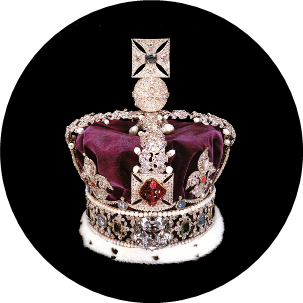
The imitation of gemstones was hugely popular, sometimes inferior gems were also used to imitate more precious gems. One imitation that worked very well even ended up in one of the most well-known symbols of power of today: The Black Prince’s Ruby, which is in fact a large spinel taking a prime location in the Imperial State Crown. Even though it is not sure the Black Prince did in fact return with this specific stone from the 14th Century Spanish war, the stone’s legend is a great example of the symbolic meaning of gemstones, their connection to wars, power and wealth.
Crystal 3: Ruby

The third crystal is the first lab-grown gemstone that was commercially viable, a Ruby. Many were conducting experiments in the 19th Century, but it was Verneuil with his fusion growth method, who is considered the father of technology. The crystal growth technology he developed in 1902, also referred to as flame-fusion growth, is up until today popular. The influx of these lab-grown crystals in the market inspired the development of the branch of mineralogy and geoscience we know as ‘gemmology’, set up to distinguish the mined gemstones from ‘synthetics’.
Crystal 4: Cubic Zirconia

The quest to imitate diamonds took many more years, and along the way some very popular imitations were created, including Cubic Zirconia: which to date has remained one of the most economically important competitors for diamonds since its commercial production began in 1976.
Crystal 5: Man-made Diamonds
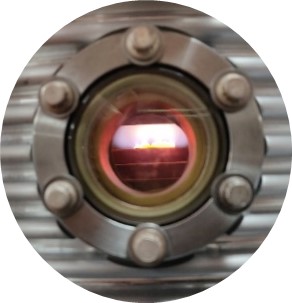
The code to grow diamonds was cracked in the mid 1950’s. These Diamonds were initially too small for jewellery. Production of larger crystals began in the mid-1990s and continues to today using HTHP or CVD processes. This has reignited the controversy surrounding these materials in the jewellery industry, which remains fearful of a disruption by these ‘fakes’. For the first time since its invention the slogan ‘Diamonds are Forever’ has been replaced with ‘Only Natural Diamonds’ and a 5th C was introduced to the 4-C system (Clarity, Cut, Colour, Carat). And no, it is not conscious – even though it should be – it is the C for Certification.
Crystal 6: Kimberlite
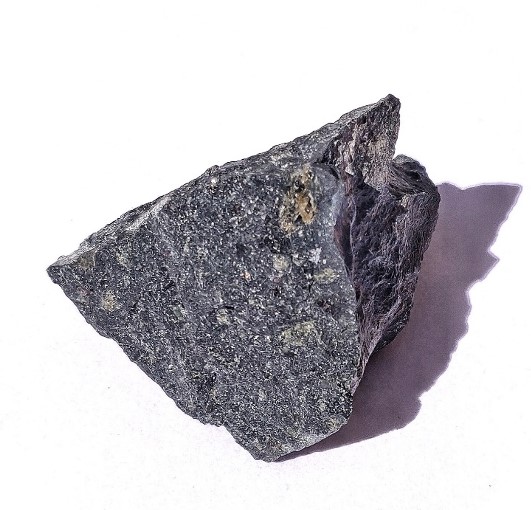
Even though the jewellery industry at large and some key players in the diamond industry in particular, have been trying to block innovations with these materials, they do offer some opportunities. They might, for example, provide a more sustainable alternative to mined stones. Take the material kimberlite, which is a waste product from mining, of which on average 4350 kg is extracted to mine 1 carat.
Crystal 7: Man-made Quartz

Even though scientist’s fascination with gemstones might have sparked the first growth of crystals, there are many examples of crystals now grown for technology: man-made quartz for example is used in a range of communication devices for its intrinsic properties. The hydrothermal growth of quartz is a big market and remains set for notable growth.
Crystal 8: Silicon
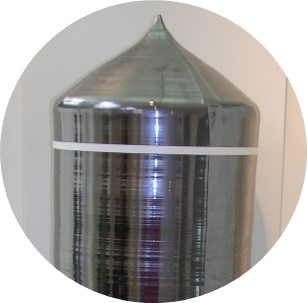
But the material with importance for all our technological fixes today is Silicon. From the smartphones in our pockets to electric cars, hypersonic aircraft, pacemakers and supercomputers – inside every one of them, are tiny pieces of crystal that make it all possible. Silicon is a crystal, grown through the Czochralski method, and is probably the most researched material on the planet.
Crystal 9: Sugar
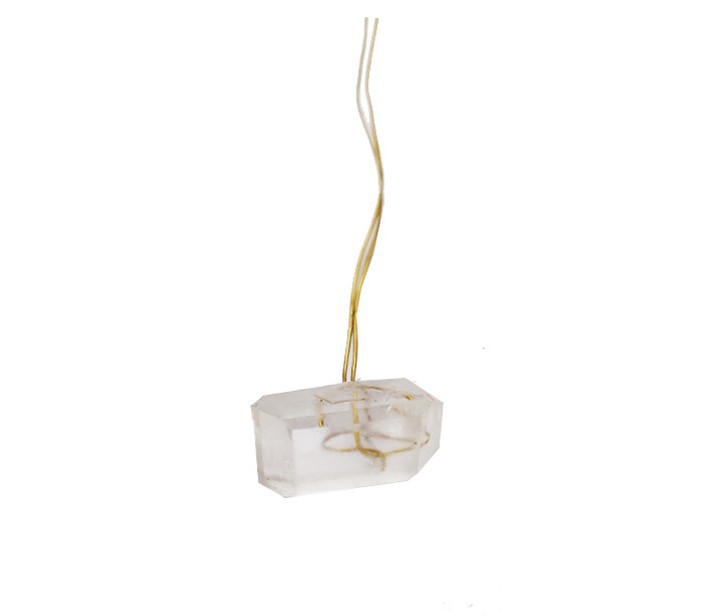
Crystal growth remains for most people an unknown phenomenon, but even though the techniques to grow crystals are wide ranging and sometimes highly complex, we all could understand the basics by growing crystals at home. Not everyone may know, but sugar is a crystal. And it is one that you could grow yourself easily, making it an ideal crystal to learn more about the process with for designers or a fun activity to do for some evenings and afternoons.
Crystal 10: BRG
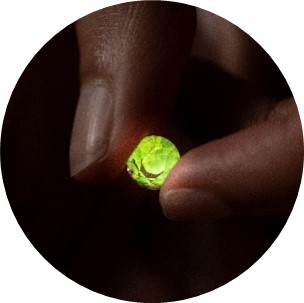
My last crystal is one of my own research. For the last three years, I have been collaborating with Dr. Daniel Rytz from the company BREVALOR Sarl on creating unique gemstone and jewellery designs with the new material called ‘BRG’. The material is a step-change in the development of gemstone materials for the jewellery industry, offering jewellery designers a material that is not only brilliant when seen in daylight, but now also illuminates our surroundings when seen in the dark too.

